
Clinical Training
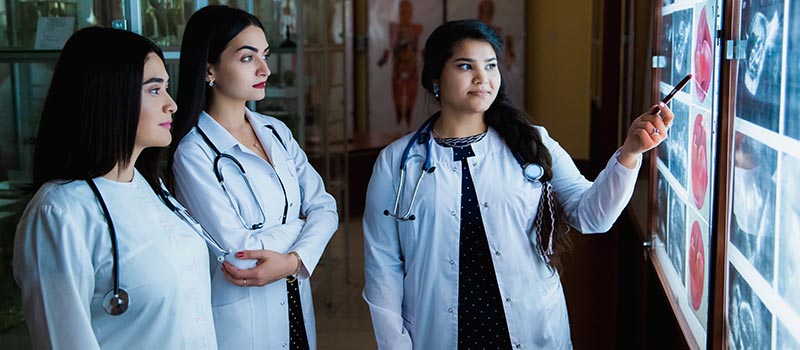
The Mercy Catholic Diagnostic Radiology Residency curriculum is designed to provide a comprehensive educational experience that balances clinical service, structured learning, procedural training, scholarly activity and progressive autonomy. By the completion of residency, graduates are exceptionally prepared for the ABR examinations, fellowship training and independent practice.
Clinical rotations
Residents rotate through all major areas of diagnostic and interventional radiology, including:
- Emergency radiology
- Body imaging
- Cardiothoracic imaging
- Computed tomography (CT)
- Body MRI
- Radiography and fluoroscopy
- Ultrasound
- Neuroradiology
- Pediatric radiology
- Interventional radiology
- Nuclear medicine and PET/CT
- Musculoskeletal imaging
- Breast imaging and mammography
The curriculum is structured around a comprehensive three-year core educational experience that provides outstanding preparation for the ABR Core Examination. During the fourth year, residents have increased flexibility to tailor rotations to their career goals while preparing for the ABR Certifying Examination.
Advanced training opportunities
All PGY-5 residents may participate in customized mini-fellowships within areas of interest to gain additional subspecialty experience before graduation. Residents also attend the renowned Radiologic Pathology Correlation Course at the American Institute for Radiologic Pathology, with full financial support provided by the residency program.
Daily learning experience
Education is integrated into every aspect of residency training. Residents participate in multiple daily one-on-one readout sessions with subspecialty faculty, receiving individualized teaching, mentorship, and real-time feedback while developing diagnostic accuracy and clinical decision-making skills. Hands-on procedural experience is emphasized throughout training, allowing residents to develop technical expertise and clinical confidence.
Multidisciplinary conferences
Residents work closely with faculty to prepare and present imaging findings at interdisciplinary conferences, including General Tumor Board, Thoracic Tumor Board, Breast Tumor Board, Urology Tumor Board and Morbidity & Mortality Conference.
These conferences provide valuable experience in multidisciplinary collaboration and demonstrate the critical role radiologists play in patient care. Faculty also conduct dedicated subspecialty board review sessions to ensure residents are thoroughly prepared for the ABR Core Examination.
Graduated responsibility & call experience
The program is designed to provide progressive responsibility throughout residency. Residents participate in supervised evening and weekend call experiences starting in year one, while second-year residents transition into a night-float system that promotes increasing autonomy while maintaining attending support. This graduated model develops confidence, efficiency and independent decision-making while ensuring a strong educational foundation.