
Don’t get sidelined: Injury prevention tips for football season
October 21, 2026Categories: Blog Posts
Tags: Orthopedics, Sports Medicine
With the turn of the season comes one of America’s favorite pastimes—football.
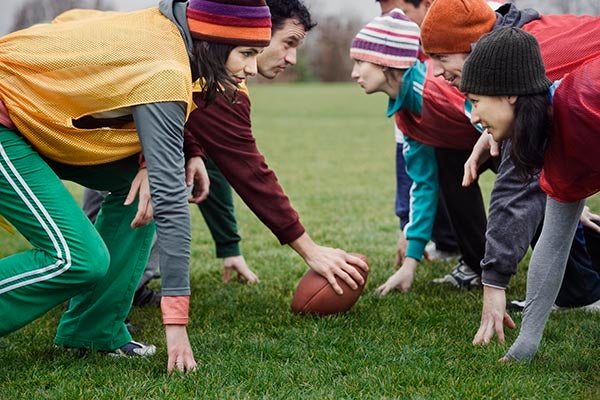 In locker rooms across the country, players are gearing up with their helmets, padding and other safety equipment, excited to get on the field and show fans what they’re made of.
However, whether they’re a high school, collegiate or professional athlete, or even a “weekend warrior” trying their prowess at the sport for fun, such protective items aren’t enough to prevent a serious injury.
According to Dinesh Dhanaraj, MD, an orthopedic surgeon and sports medicine provider at Trinity Health Mid-Atlantic Medical Group’s Orthopedics Langhorne, conditioning, stretching and year-round movement is key to decreasing risk.
“A lot of athletes come off summer not as conditioned. So, when they restart, they’re not as limber or in shape, and they sustain injuries. The idea is to gradually ramp up the level of training and the level of intensity because there’s no reason why someone should go from zero to 60,” says Dr. Dhanaraj. “But it’s important to stay at least somewhat active throughout the summer, even before pre-season. If you’re sitting around playing video games all summer, diving back into a sport is asking for injury.”
ACL and other injuries in football
The most common football injury that Dr. Dhanaraj sees is a tear of the ACL (anterior cruciate ligament), one of the main ligaments in the center of the knee joint that connects the thighbone to the shinbone.
This is due to football’s constant contact and collision, but even more so the cutting and pivoting movements that are necessary in the game.
“You don’t see ACL tears in baseball or softball as much because the mechanism of the sport isn’t explosive pivoting,” explains Dr. Dhanaraj.
Other injuries may include:
- MCL (medial collateral ligament): A sprain or tear of the tissue band on the inner side of the knee that connects the thighbone to the shinbone
- Meniscus: A tear that damages the cartilage shock absorbers between the shinbone and thighbone
While ACL injury prevention is, unfortunately, never 100 percent in a contact-heavy sport, athletes can take steps to ensure they’re in the best physical condition to avoid it as much as possible.
“Sometimes, it’s just a bad luck injury. It can be from pivoting wrong, or it could be an offensive or defensive lineman who gets dogpiled and his knee is just in a bad spot,” says Dr. Dhanaraj. “But general conditioning, stretching and slowly ramping up in activity is the key to lowering risk.”
When to pause the game
If a player does sustain an ACL tear on the field, there are a few common warning signs they should not brush off and attempt to keep playing through:
- Hearing or feeling a pop
- The knee swelling up rapidly
- Being unable to walk or bear weight without feelings of instability
Treatment and getting back on the field
Recovery depends on the severity of the injury, but typically, ACL tears will keep athletes away from the game for an extended length of time compared to MCL and meniscal.
“For an in-season conditioned athlete, it’s at least six to nine months before people are playing sports again because there is surgery involved. There are crutches, a weight-bearing period where there’s modifications, there’s bracing. And then there’s a lot of rehab to get back to that level of sport,” says Dr. Dhanaraj. “If someone’s not an athlete, it can be even longer—over a year.”
Football injuries and the “weekend warrior”
Non-athletes, stresses Dr. Dhanaraj, should be especially careful. Even if it’s a casual game in the backyard with family on Thanksgiving, their risk of injury is incredibly high if they’ve never played or haven’t played in years.
If you know you’re going to participate, spend a few weeks getting your body ready. Stretch, go on daily walks/runs and, when it’s game time, know it’s okay to not go as hard as you did at 18.
“Unfortunately, as we age, we do not become more limber and conditioned. It’s the opposite. We get stiffer, weaker. You have to make up for that level of natural deconditioning that occurs over time due to a more sedentary lifestyle,” says Dr. Dhanaraj. “When I got into my 20s and 30s, I’d try to play soccer at the level I did when I was in high school and immediately tear my hamstring in the first 20 minutes of playing. You have to be cognizant about not starting out at a level that’s not safe for your body.”