
Turf vs. grass: Why football players face greater injury risks on artificial fields
October 21, 2026Categories: Blog Posts
Tags: Orthopedics, Sports Medicine
NFL players have been extremely vocal in recent years about their contempt for artificial turf fields, which are housed in 14 of the league’s 30 stadiums.
 MetLife Stadium in East Rutherford, N.J., in particular is under fire, with well over a dozen players suffering ACL tears, MCL tears, ankle sprains and other injuries since 2020 at the home of the New York Giants and Jets. Athletes and coaches alike are blaming the turf, saying it increases risk of injury and pleading with the NFL to require natural grass at all stadiums.
While it’s unclear if the turf was responsible for every injury over the past six years, there is validity in their concerns: Research shows that sports arenas and stadiums with artificial turf have higher levels of knee and lower extremity injuries compared to their natural grass counterparts.
But why is this the case?
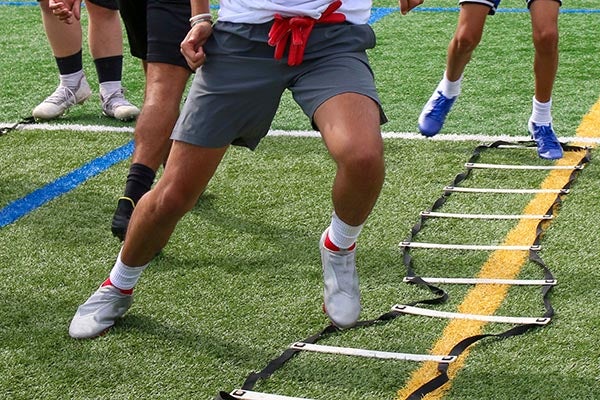
Unlike natural grass, which is softer and provides a certain amount of give when players run, pivot and tackle, turf is laying on top of concrete. Though manufacturers have worked to soften it over the years, it’s still not ideal.
“When you’re pivoting on concrete, when that force is exerted, it doesn’t go anywhere. It has no choice but to relay back to the knee, the foot, the ankle. If there’s an unnatural position, it can rupture a ligament,” says Dinesh Dhanaraj, MD, an orthopedic surgeon and sports medicine provider at Trinity Health Mid-Atlantic Group’s Orthopedics Langhorne. “On grass, the dirt will shift and allow for some leniency in the amount of force that gets dissipated.”
Even in high school and collegiate football, athletes will likely find themselves switching between turf and grass fields over the course of a season. While Dr. Dhanaraj doesn’t recommend completely altering how they play, it’s a good idea for athletes of all levels to be cognizant of what they’re working with.
“If they’re not used to a turf field and they’re playing on it for the first time, try and get out there early,” he says. “Feel the turf ahead of time instead of waiting until the first blow of the whistle. They should acclimate and familiarize themselves with how it may affect their game and how they move.”
Though turf fields are a hot button topic, it’s important to note that natural grass fields don’t grant athletes immunity from injury.
At such stadiums, like the Philadelphia Eagles’ Lincoln Financial Field, there may be inconsistencies in how the grass is laid, causing the ball to roll differently or players to cut differently depending on the section of the field. Additionally, rain can cause the field to get muddy and retain water, impacting how players move and increasing injury risk.
No matter the material of the field, it’s vital to stay on top of conditioning, stretching and warm-ups, which is the best preventative measure against football injuries.