
Weekend Warriors: Don’t let your summer end in an injury
June 26, 2026Categories: Blog Posts
Tags: Orthopedics
Summertime weekends are often synonymous with relaxation, from lazy days at the beach to cozy backyard barbecues.
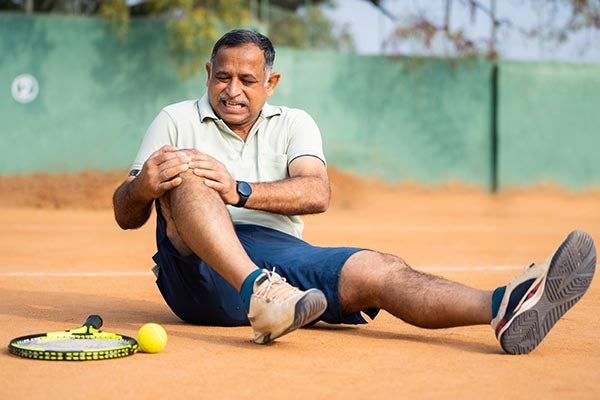 But for the “weekend warrior,” those 48 hours aren’t spent with toes in the sand.
These individuals often cram a week’s worth of sports and strenuous physical activity into just two days after spending most of the work week behind a desk. While studies show packing all activity into a weekend has cardiovascular benefits, this lifestyle also comes with a high risk of acute injuries, including strains, pulled muscles and fractures.
According to Dinesh Dhanaraj, MD, an orthopedic surgeon specializing in sports medicine at Trinity Health Mid-Atlantic Medical Group’s Orthopedics Langhorne, weekend warriors are prone to injury because their bodies are not properly conditioned. Jumping directly into tennis, soccer, basketball, pickleball or the gym is a recipe for disaster.
“Don’t think of sports as your means to getting into shape. You need to get into shape first to play the sport, especially if you’re not in your 20s anymore. I wish I could say that the body gets more flexible, limber and strong. But it doesn’t. It’s the opposite. Your tendons and ligaments get tighter. Your muscles get a little weaker. To go out and play that level of activity without the proper conditioning is asking for trouble,” says Dr. Dhanaraj.
For those age 40 and up, dedicating some time throughout the week to walking, stretching, gentle band work and core exercises greatly reduces risk of injury—even if the more dynamic activities are still limited to the weekend.
By neglecting such conditioning before jumping into an explosive sport or workout, weekend warriors are prone to injuries such as:
- Achilles tendon rupture: Common when running in basketball or backing up in tennis, and may feel like getting kicked
- Rotator cuff tears: Common in tennis and weightlifting, and may feel like a dull ache that hurts for a few weeks
Weekend warrior injuries aren’t limited to the court or playing field. Many people also spend their weekends tackling home improvement projects, renovations or landscaping, all of which can take a toll on the body. Actions like heavy lifting, hammering and painting can result in strains and muscle tears.
Additionally, injuries from ladder falls are common amongst weekend warriors. Because they tend to squeeze an entire project into two days and want to finish as soon as possible, they’re likely to move quickly—taking all their tools up with them and not waiting for a loved one to keep the ladder steady.
“As an orthopedic surgeon, I look at a ladder and see a major safety hazard. If the ladder becomes unsteady and you fall, even if you’re not that high up, you can get a wrist, forearm or elbow fracture. You’ll even sometimes see heel and lower extremity fractures,” says Dr. Dhanaraj. “Have someone hold the ladder and hand you what you need. Don’t try to do everything at once. It’s not worth it.”
If a weekend warrior does have pain or discomfort after playing a sport or experiencing a fall, it’s important to seek care and not brush it off. Soreness, explains Dr. Dhanaraj, is often a warning sign of a serious impending injury. For example, individuals may feel tightness in their calf during or after a game of tennis. This is known as “tennis leg,” which is a small rupture of the muscle belly and not something to ignore.
“This is a true warning sign that you’re not stretching enough. This is treated non-operatively and you’re generally better in four to six weeks. But if you don’t change how you approach sports, then you’re going to get an Achilles tendon rupture and that’s six to nine months away from sports,” says Dr. Dhanaraj.
With summer underway, Dr. Dhanaraj encourages weekend warriors to focus less on squeezing every activity into two days and more on finding sustainable ways to stay active throughout the week.
“As life goes on, choose an activity that isn’t so hard on your body. Pick one you enjoy, where you don’t feel pain and you’re not putting yourself at risk for injury,” he says. “People neglect walking as an activity. Getting out and getting steps in is just as important as going to the gym and trying to lift weights.”