
When your child gets sick: Recognizing warning signs and knowing when to seek care
November 20, 2026Categories: Blog Posts
Tags: Children's Health
No parent wants to see their child sick.
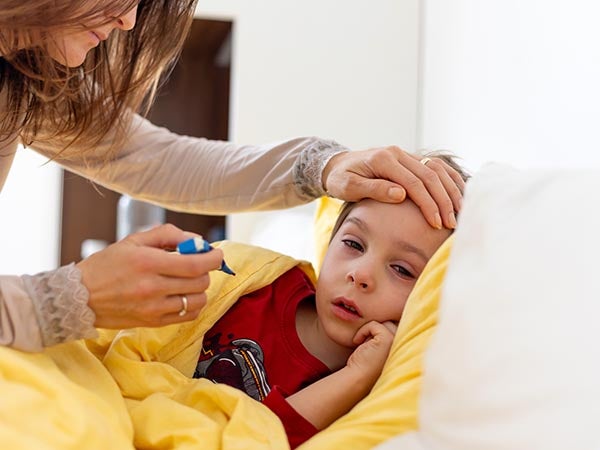 But if your little one is in school or daycare, this time of year comes with an influx of illnesses, from the flu and common cold to COVID-19 and RSV. In fact, according to the American Academy of Pediatrics, it’s completely normal for kids to contract between 10 and 12 respiratory infections per year.
While this might sound alarming, especially for first-time parents, staying informed and alert helps children get the care they need and avoid serious complications from illness.
That’s why, at St. Mary Family Medicine Bensalem, all parents receive educational guidance before their child’s first illness even occurs—not when they’re in the throes of it and more likely to panic. They’re able to better recognize a mild cold versus symptoms that warrant emergency medical attention.
“It’s about talking to parents during wellness visits, not just when they come into the office sick,” says Patricia C. Wood, CRNP, pediatrics. “The biggest thing we teach is to be aware of when your baby or toddler isn’t acting like their normal self. This is often the first sign that something is going on.”
What to watch for
Whether it’s the flu, a cold, COVID-19 or RSV, there are certain symptoms that require immediate attention:
- Eating less than half of what they usually do
- Producing less than half of their usual urine output
- Having trouble staying awake or, in the case of infants, not waking up on their own for feeding
- Respiratory distress, especially if there’s retracting in the rib cage or they’re struggling for each breath
- Wheezing and coughing, especially in cases of RSV
- A fever that lasts for more than three days in children over age 2, or more than 24 to 48 hours in younger infants and toddlers
A particularly watchful eye should be kept on high-risk children, including premature babies, and those with asthma, immune deficiencies, cardiac defects and any chronic illness.
“These infants and children are at higher risk of not necessarily contracting an illness, but of being more impaired by it if they were to get it,” says Wood. “They’re more likely to require hospitalization or interventions at the hospital.”
At-home care
Of course, not every respiratory infection is an emergency. Oftentimes, an illness will be mild, with children experiencing general low energy, loss of appetite, diarrhea or a stuffy nose without needing a trip to the ER.
In such cases, it’s important to closely monitor symptoms at home and know how to treat them to avoid dehydration, ear infection and more:
- For congested infants, opt for smaller, more frequent breast or bottle feeds
- For children one year and older with a cough, give them honey instead of cough medicine
- Increase their fluid intake (Pedialyte is a great choice for infants with vomiting and diarrhea)
- Give Tylenol or Ibuprofen as recommended by your provider to lower fever
- Keep the nose clear through saline drops/sprays, humidifiers or gentle suctioning
Strong communication
During a period of at-home care, parents can communicate directly with the team at St. Mary Family Medicine Bensalem if they have questions or concerns or need additional guidance. Through MyChart, texting and telemedicine capabilities allow an easy back and forth, helping parents feel informed about what’s happening with their child and next steps.
“It makes it a lot easier for families. They don’t have to bundle up the children to come out, be exposed to other sick children in the office,” says Wood. “And the telemedicine really comes in handy. For example, viral illnesses can often cause rashes, which parents understandably get anxious about. I can look at pictures with them in real-time and see what’s going on.”
Translation services are also available in a variety of languages, including Spanish, Russian, Ukrainian, Albanian and more.
“It takes away that extra layer of fear, of having a sick child and not being able to understand what the provider is telling you about their care,” says Wood. “Our main goal is to build trust with each family, build a rapport and give them the tools they need to care for children when they’re sick.”
While the flu shot, Nirsevimab (for RSV), handwashing, coughing into the elbow and staying home when ill can lower risk of serious illness and minimize spread, there’s no way to completely avoid having a sick kid on your hands.
But Wood wants parents to know that they can handle it.
“It’s almost an inherent thing of attending school or daycare—children are going to get sick frequently. It’s going to seem like it’s one long illness, but they’re just getting hit back-to-back with different viruses,” says Wood. “The most important thing to us is the education of families to prepare them for this and having that strong communication. Over the course of an illness, there may be multiple check-ins, several phone calls, especially this time of year when things are so rampant.”