
Preventing impaired driving this holiday season
December 18, 2025Categories: Blog Posts
Tags: Trauma, Emergency Medicine
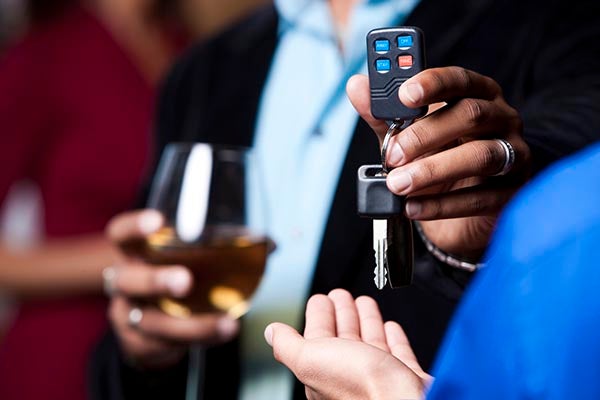 The start of winter often brings a sense of magic as family and friends gather for the holidays. But as the season unfolds, it also brings an increased risk on the roads.
When someone gets behind the wheel post-celebration while under the influence of alcohol, drugs or even exhaustion, a joyful night can quickly turn into a deadly or life-altering event.
That’s why each December, when alcohol- and drug-related crashes are at their highest, we recognize National Impaired Driving Prevention Month, which raises awareness about the dangers of driving under the influence and promotes safe alternatives.
According to statistics from the National Highway Traffic Safety Administration, approximately 30 percent of traffic deaths are related to drunk driving, with alcohol-related deaths up 22 percent over the past five years. In fact, two out of three people in the U.S. are impacted by drunk driving in their lifetime.
Also, according to the NHTSA, someone is either injured or killed in a car accident every minute and a half, and 37 people die each day from a drunk driving-related car accident.
“The numbers are astounding, and it is without a doubt a preventable problem,” says trauma surgeon Sunny Kar, DO, medical director of the St. Mary Trauma Center, who sees those daily numbers spike every Christmas Eve, Christmas and New Year’s Eve.
Someone is either injured or killed in a car accident every minute and a half, and 37 people die each day from a drunk driving-related car accident. – Source: NHTSA
While alcohol is the leading cause of impaired driving accidents, cannabis, prescription medications and lack of sleep can contribute to impairment as well.
Ready to help trauma patients
The St. Mary Trauma Center, a Level II and the oldest in Bucks County, is uniquely positioned to take care of patients who have traumatic injuries. EMTs typically alert the hospital when they’re coming with a trauma patient so that a full team is ready before the ambulance arrives.
“That involves a dedicated trauma surgeon who is physically in the hospital 24/7, a dedicated trauma team in the emergency department, access to the trauma ICU and operating rooms if needed, and access to a number of surgical specialties to handle pretty much any injury that people could have,” says Dr. Kar. “It gives patients the best shot at meaningful and pragmatic recovery by getting them care immediately.”
Impaired driving accidents are especially devastating because reaction time, vision and overall judgement are negatively affected, leading to speeding, swerving, slow braking and ignoring red lights or signs. The most common injuries for impaired driving victims include broken ribs or breastbone, extremity fractures, trauma to the head, neck injury from whiplash, brain bleed and abdominal injuries.
“A car is going at a certain rate of speed, and the amount of energy that’s in that car is a function of the speed and the mass of the entirety of the car. So, we’re talking about a considerable amount of energy that’s being dissipated when [the car crashes], and all that energy must be transferred somewhere,” explains Dr. Kar. “A lot of it ends up going to the driver and passengers, who take the brunt of the force, which has to be distributed somewhere. It goes to organs and parts of the body that aren’t accustomed or designed to take that kind of pressure.”
Not worth the risk
There’s the common belief that “just one drink” still makes someone fully functional to drive. However, that’s not the case, especially this time of year when winter weather can make the roads treacherous. Even the slightest impairment can be deadly when you’re dealing with icy streets, low visibility and increased deer activity.
“Anything can affect your ability to drive. Really, there’s no such thing as an acceptable amount of risk when it’s your life,” says Dr. Kar. “If there’s a question or concern or even a thought, just don’t drive. Nobody ever regretted being too careful or too safe.”
As holiday celebrations commence, it’s important to watch out for family, friends and colleagues. Though it may be uncomfortable in the moment to stop someone from getting behind the wheel while they’re impaired, you’re potentially saving at least one life, not to mention the legal, economic, physical and emotional hardship that typically comes with an impaired driving crash.
“It’s one of those see something, say something situations. Anybody who is in a situation where they see incoming impaired driving has an opportunity to really be a real friend and pal,” says Dr. Kar.
Additionally, it’s vital that parents and guardians instill safe driving practices in teens, who often feel invincible when they first get their license. Even some adults believe that, because they’re a great driver, nothing bad could ever happen … even after a few drinks.
“It’s one of those see something, say something situations. Anybody who is in a situation where they see incoming impaired driving has an opportunity to really be a real friend and pal.” – Sunny Kar, DO
“It’s not a skill issue. A lot of times, people misinterpret that a poorly skilled driver cannot drink and drive, but somebody who is an excellent driver could, and it wouldn’t adversely affect them. But it’s a matter of biology,” says Dr. Kar. “Your body simply cannot function in the same capacity when there are impairing substances. It doesn’t matter if you’re an athlete with fast reflexes or a professional racecar driver. The alcohol, the drugs—they don’t care. They affect your brain, your reflexes, your vision and your thought process equally. And so nobody, no matter what, is immune to the effects of impaired driving.”
Therefore, when in doubt, don’t get behind the wheel and put lives at risk. Instead, use a rideshare app or call a cab. While those may be costly in the moment, especially with holiday surge pricing, it’s better than having to pay for a major operation or bail.
“There’s no advantage or reward for taking risks. There’s no positive that comes from impaired driving,” says Dr. Kar. “Everywhere you look, it’s just a negative and so it’s something you should avoid.”