
Keep kids energized this summer with easy, healthy snacks
June 15, 2026Categories: Blog Posts
Tags: Nutrition Services
 School is officially out for summer and warm weather activities are now in session. From playing at the pool to bike rides around the neighborhood, high-energy fun is on most kids’ schedules for the next few months. To help maintain that energy throughout the day, snacks packed with protein, fiber and other nutrients are essential.
For busy parents/guardians who want to instill healthy eating habits but don’t have the bandwidth to craft time-consuming options, Sophia Friedeborn, MS, RDN, LDN, a clinical dietitian and Diabetes Prevention lifestyle coach at Saint Francis Hospital, outlines quick, easy, kid-friendly snack ideas that are sure to keep them energized for tons of summer fun.
Greek yogurt
According to Friedeborn, Greek yogurt is a great high-protein option that can be used for a variety of snacks, which are ideal for even the pickiest of young eaters.
- Bark: Spread Greek yogurt onto a sheet pan. Mix with a bit of honey or a different sweetener of your choice, like agave syrup or stevia for a zero-calorie option. Chop and mix in a fruit of choice (strawberries work great). Add creamy peanut butter. Put in freezer. Drizzle melted chocolate on top when taken out.
- Popsicles: Mix Greek yogurt into fruit smoothies and turn them into popsicles. Use a popsicle mold or, if you don’t have that, a small glass container or ice cube tray. Place in freezer and pop them out for a quick, cool snack.
- Smoothie: Instead of turning it into a popsicle, serve the smoothie as is. If your child will tolerate it, try blending in some spinach. While the spinach will change the color of the smoothie when blended with lighter-hued fruits like strawberry and mango, it won’t alter the color when mixed with darker fruits like blueberries or blackberries.
- Dip: Mix Greek yogurt with peanut butter (or sunflower seed/almond butter if there’s an allergy) and a bit of cinnamon. Have strawberries or apple slices with it.
Watermelon pizza
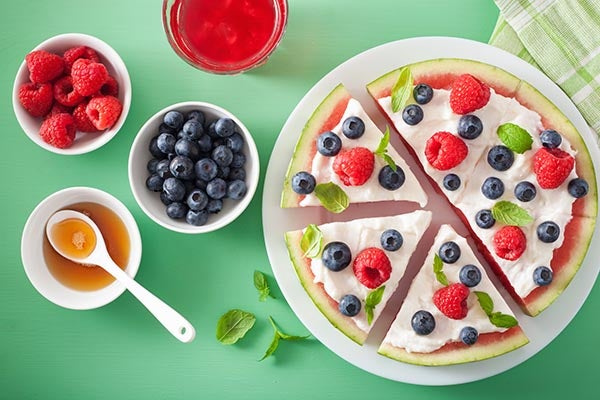
Cut a watermelon into full, round slices. Add a dollop of yogurt with some fresh berries, and a mint or basil leaf for extra color. You can also put some lemon or lime juice on top for extra Vitamin C.
Energy oat balls
Mix oats, creamy peanut butter (or another nut butter) and maple syrup. Depending on your child’s preferences, you can also toss in some flax and chia seeds, or hemp hearts. There are various recipes online.
“You can even add chocolate chips, pumpkin seeds—really whatever you think your kid might enjoy. But the oats, peanut butter and syrup baseline tends to be well tolerated,” says Friedeborn. “These are meant to provide energy and some protein to kids as they’re running around, doing summer stuff, jumping in pools. They’re sweating a lot, so they do need energy.”
Apple nachos
Drizzle creamy peanut butter (or another nut butter) over apple slices. You can also drizzle some melted chocolate and add nuts. If there’s an allergy, crumble some graham crackers or unsweetened coconut flakes on top for some extra sweet crunch.
Ants on a log
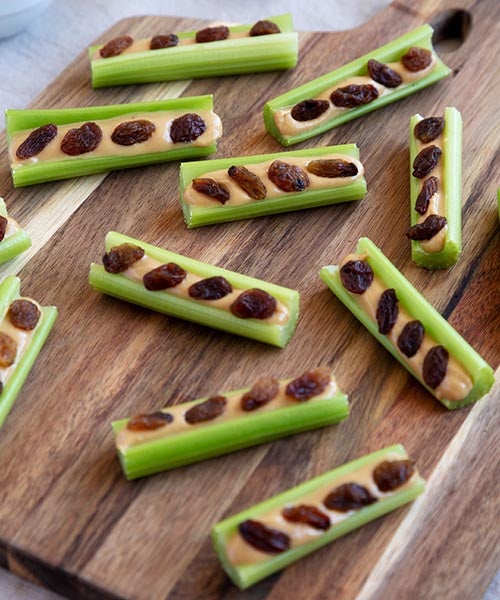 This is a classic snack that takes minutes to make. Spread nut butter onto celery and put raisins on top.
“It’s a fun way for kids to eat their food,” says Friedeborn. “I still love it. I’m not a kid, but I enjoy it a lot.”
Trail mix
While a standard trail mix is often comprised of peanuts, cranberries and raisins, you can concoct one that meets your child’s preferences and nutritional needs. Other options include different kinds of nuts, sesame sticks and chocolate chips.
“Anything that you think your kid will like, you can mix together as a type of quasi trail mix,” says Friedeborn.
Chickpea cookie dough
For a snack that provides extra fiber, blend chickpeas with a creamy nut butter, maple syrup or another sweetener, vanilla extract and chocolate chips. Use fruit or animal crackers to dip.
“They’re getting in some extra fiber and nutrients from those beans, so it’s a win. Trying to balance how we get nutrients sometimes means using something that’s a little less healthful as a spoon. It’s going to help you eat more of the healthy stuff,” says Friedeborn.
Dips
- Hummus: While this might not be a go-to for most kids, making it a different color with some dye may make them more likely to try it.
- Ranch: Mix Greek yogurt with a powdered ranch packet.
- Tzatziki: A fresh option and great source of protein.
All can be eaten with a variety of vegetables. If your child isn’t a fan of veggies, Friedeborn shares a helpful tip: “Choose the veggies that they like, but also have ones around that they haven’t explored yet to get them used to seeing them. And if your kid says, ‘I don’t want that’, it’s helpful if you, as the parent, likes the vegetable. You can go, ‘Great, then I get to have it!’ They see that you like it and you desire it. Over time, they’re going to be more curious about trying it.”
Green pancakes/waffles
Blend spinach with the milk you plan to use for pancake/waffle batter to get more vegetables into your child’s diet. Make it a fun theme—St. Patrick’s Day, Shrek or monsters.
“It really does not affect the taste at all,” says Friedeborn. “When you’re cooking it, the smell is a little bit different. But the taste won’t be.”
Avocado
Serve a guacamole dip or, if your child prefers a thinner consistency, make an avocado cilantro crema. Blend avocado, cilantro, a little bit of water, lime juice and salt.
Additional options and tips
- A pre-packaged fruit bar
- Cheese stick
- Snack plate with fruit, veggies, cheese, crackers and dip
- Blend frozen cauliflower into smoothies for extra nutrients
- Grate carrots or zucchini into banana bread or muffin mixture
Of course, kids are kids and will inevitably crave chips or another “unhealthy” snack. And that’s perfectly okay. The key, explains Friedeborn, is balance and instilling overall healthy eating habits at a young age.
“Protein is foundational for growth. They need healthy fats to help support hormones. They need fiber-dense carbs, which will help them feel full longer. It’s not to say that they can’t have Doritos from time to time. But if that’s all they’re getting, then that’s all they’re going to want. We want them to be exposed to more of these foods at a younger age because it will help their preferences as they get older,” says Friedeborn. “The choices they learn to make in childhood can absolutely influence how easy or hard it is for them to make healthy choices as an adult.”