
How your smartwatch can detect serious heart conditions
May 4, 2026Categories: Blog Posts
Tags: Heart Health
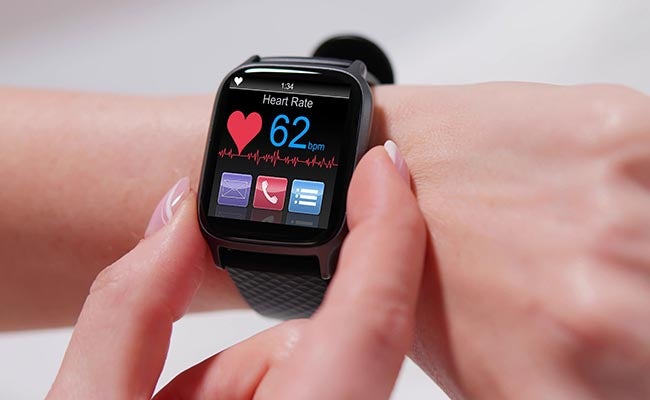 The latest generation of smartwatches may be fast, convenient and stylish—but did you know they can also be lifesaving?
Such devices have long held basic heart monitor capabilities, detecting various types of arrythmias like tachycardia (fast heart rate), bradycardia (slow heart rate) and atrial fibrillation, or AFib (fast and irregular rhythm).
But now, many smart watches have a vital additional feature. If AFib—a serious condition that can increase risk of death, heart failure and stroke—is detected, the user can quickly and easily take action.
“If it alerts that you may have AFib, you simply put your finger on the side and it will obtain a single-lead EKG in 30 seconds. That EKG is stored as a PDF, which you can bring to your cardiologist, who can then look at the tracing and say whether it’s truly AFib,” says Ashwani Gupta, MD, a cardiac electrophysiologist at Trinity Health Mid-Atlantic Medical Group’s Electrophysiology Langhorne.
Timing matters
According to Dr. Gupta, 50 percent of people with AFib have no symptoms, while 30 percent experience slight shortness of breath or fatigue. Only about 20 percent have heart palpitations. The smartwatch EKG feature allows the symptomless population to be aware of their condition before something more serious—like stroke—occurs.
“Prior to these watches, every fifth patient we diagnosed with AFib was only because they had a stroke,” says Dr. Gupta. “By patients having these watches, we’re able to help so many who otherwise wouldn’t have been picked up. Now, we can put them on a blood thinner early, treat their AFib and prevent them from having a stroke. These devices are amazing. I’m seeing people on an almost daily basis who are only getting diagnosed because their watch alerted them.”
Who should consider an EKG-equipped smartwatch
Since the risk for AFib increases with age, Dr. Gupta urges those over age 60 to consider one of these devices, especially if they have any of the following risk factors:
- Obesity
- Sleep apnea
- High blood pressure
- Diabetes
- Family history of AFib
- Personal history of heart condition (past heart attack or congestive heart failure)
For older folks who might be concerned about learning how to use this technology, Dr. Gupta explains that it’s rather simple. In addition to the smartwatch, all that’s required is a smartphone, on which they must download the corresponding app. If an AFib alert comes through, they just need to push the EKG button and hold their finger down for 30 seconds. At their cardiologist visit, the provider can then open the app and access the tracings.
Not a health care replacement
While helpful in alerting to a potentially serious condition, smartwatch EKGs—which have an accuracy of 85 to 90 percent—are not perfect. If an AFib episode lasts less than 10 minutes, the device may not pick it up. It may also give a false positive after detecting the occasional skipped beat. It’s important to always see a cardiologist as soon as possible after an alert, who can confirm what’s going on.
Additionally, if someone is experiencing symptoms of a heart attack, they should not rely on the device for a diagnosis.
“The watch is only looking at the electrical signals for AFib, fast and slow heart rate. It cannot look at whether you’re having a heart attack, congestive heart failure, valve problems, blockages,” says Dr. Gupta. “If you’re having chest pain, if you are concerned about a heart attack, the watch is not for those purposes.”