
Finding balance at Thanksgiving: Why moderation matters more than perfection
November 23, 2026Categories: Blog Posts
Tags: Nutrition Services
Thanksgiving is a time for family, gratitude and, of course, drooling over tables laden with deliciousness.
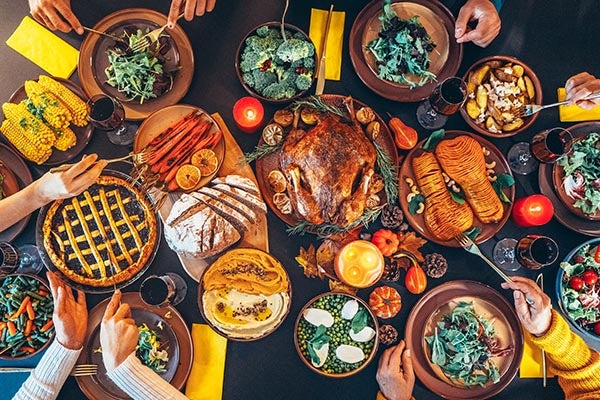 From juicy turkeys and buttery potatoes to assortments of cheeses, dips and pies, the fourth Thursday of November is truly a feast for the senses.
However, for those on a weight loss journey, the holiday may come with some worry that a day of indulging will undo progress. But there’s good news—it’s entirely possible to craft a satisfying Thanksgiving plate without the guilt.
According to Sophia Friedeborn, MS, RDN, LDN, clinical dietician and Diabetes Prevention Program lifestyle coach at Saint Francis Hospital, choosing diverse options, practicing moderation and listening to your body are all great ways to enjoy your favorite dishes.
Building a balanced Thanksgiving plate
It’s a normal instinct to want to fill your dish until it’s overflowing when everything looks so good. Instead, think about dividing it into four quarters:
- Protein (turkey)
- Carbohydrates (potatoes, stuffing, macaroni and cheese)
- Vegetables (green beans, cabbage)
- Fruit
“Try to include as many colors on your plate as you can,” says Friedeborn. “In general, try to avoid a mono way of eating, where it’s just one macronutrient, whether it be carbs, fat or protein. This is where we start to see high blood sugar issues. If you have turkey, mashed potatoes and mac and cheese, which are all one color, you can balance it with some green beans or red cabbage.”
Once you’ve sampled a little of everything, decide what you enjoyed the most and help yourself to more of it, especially if you’re still hungry. And if you end up having more than a quarter of grandmom’s signature macaroni and cheese, it’s perfectly okay.
“I think that’s where people might take it too seriously. You’re not eating like this every day,” says Friedeborn. “Being too obsessed with eating clean all the time can take you out of the social dynamics of food and how it brings people together. It brings us a sense of joy, comfort and entertainment.”
Listening to your hunger cues
While it might seem like a smart idea to skip breakfast and lunch so that you’re extra hungry for Thanksgiving dinner, Friedeborn doesn’t recommend this. On a hunger scale of 1 – 10, it’s best to avoid the extremes of either end—one being starving and feeling dizzy, 10 being so full you can hardly move.
“We want to stay between 3 – 7, hungry to satisfied. We need calories throughout the day for our bodies to function properly. If you go all day without eating, your stomach slightly shrinks and your body will slowly start to conserve energy if it doesn’t know when it’s getting its next meal. Your metabolism slows down and then when you suddenly have this big, massive meal, it’s going to digest a little differently,” says Friedeborn.
Alcohol and dessert
Like the main course, you don’t have to completely avoid the other indulgences of Thanksgiving. If you’d like to enjoy a few drinks and not overdo it, Friedeborn recommends the following:
- Don’t drink on an empty stomach—alcohol can stimulate the appetite, and you may be more likely to overeat or go back for leftovers at the end of the night
- Stay hydrated by having a cup of water in between each alcoholic drink
- Stick to lower-calorie options, such as seltzers
- Try watering down alcohol when possible—beer and Sprite Zero is a popular German drink called a Radler
As for dessert, moderation is once again key.
“Should you have the whole pie by yourself? No. If you’re really worried about it, share a slice with a family member. You could even go for a walk after and encourage your family to come as well,” says Friedeborn. “But have the piece of pie. When are you going to have it again?”
Taking morality out eating
For many, the day after Thanksgiving may come with feelings of guilt and self-degradation. If you had some extra mac and cheese, pie and a glass of wine, it’s easy for some negative thoughts to creepy in: “I can’t believe I did that. This is why I can’t lose weight.”
But Friedeborn stresses that food isn’t inherently good or bad—it’s meant to provide us with energy. One day of consuming some extra calories while making cherished memories with loved ones isn’t a reason to self-criticize.
“Sometimes, you’re going to have food that doesn’t provide much else outside of energy. A cookie will give you some sugar and fat, but there’s not many nutrients. However, it’s filling another area of your life—that enjoyment piece and bonding with family on a holiday,” says Friedeborn. “It’s not all or nothing. We have this concept of balance and moderation for a reason because it does work. Give yourself grace that it’s not a big deal to have these foods sometimes. It’s about your overall patterns in comparison to these one-offs.”