
Faces of Trinity Health Mid-Atlantic: Sophia Friedeborn
June 22, 2026Categories: Faces of Trinity Health Mid-Atlantic
This series spotlights colleagues who are helping create a safe, healing and compassionate environment both in and out of the hospital.
For many years, Sophia Friedeborn didn’t know what was going on with her health. Despite frequently fainting and struggling with weight management, her symptoms were dismissed by doctors as stress.
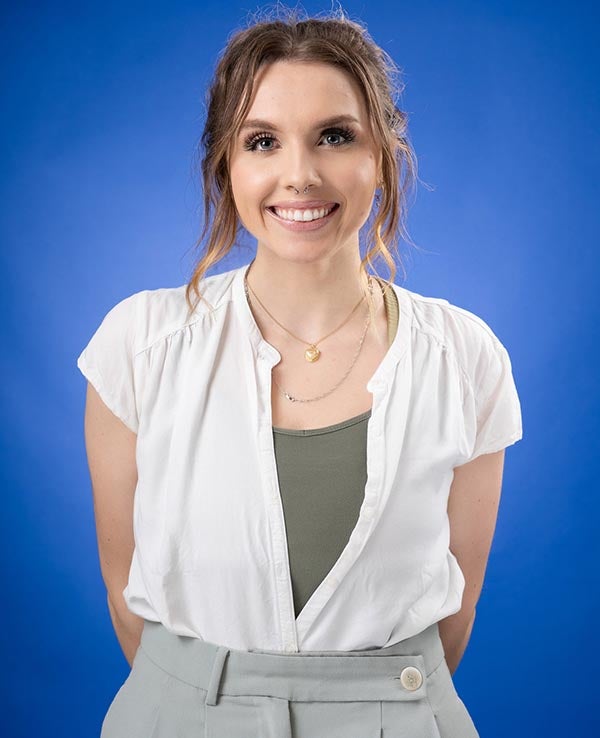 It wasn’t until her 20s—following nearly two decades of fruitless appointments—that she was diagnosed with POTS (a disorder of the autonomic nervous system) and PCOS (a common hormonal and metabolic disorder). Knowing what was impacting her body allowed Friedeborn to take charge of her nutrition—a crucial aspect of managing both conditions—and reclaim her life.
Now, as a clinical dietitian and Diabetes Prevention Program lifestyle coach at Saint Francis Hospital, Friedeborn, MS, RDN, LDN, is making sure no patient feels brushed off when it comes to their health.
“I know what it’s like to be in a patient’s shoes,” says Friedeborn. “It’s been an amazing experience to shift from being a patient to a provider, to understand some of the struggles that they go through. Sometimes, it’s helpful for them to just have someone to listen and relate to how hard things can be.”
Friedeborn’s position at Saint Francis is unique in that it’s fourfold. She provides inpatient coverage, outpatient counseling for those undergoing bariatric surgery, medical nutrition therapy for folks with diabetes or renal disease, and education as an instructor of the year-long Diabetes Prevention Program.
Though she balances a lot on any given day, Friedeborn is adamant about taking her time with each patient she encounters. By truly listening to their concerns, daily nutrition and medical history, Friedeborn problem solves to get to the root of what might be causing negative symptoms. While this process sometimes isn’t linear, the solution is always sustainable.
“In my experience as a patient, the fix was always a medication or something I had to continually pay for. It was never, ‘Here’s this lifestyle habit that you could try.’ But healthy eating patterns can support most chronic conditions,” says Friedeborn. “I always talk to patients about trial and error. We’re not going to know what’s happening unless we get a detailed look into what your day-to-day looks like. How could some of these pieces be influencing symptoms? How can we incorporate something that might help?”
In each patient conversation and Diabetes Prevention Program class, Friedeborn stresses the importance of basics like protein, fiber and hydration—and focusing on overall health rather than the number on the scale.
“I share with my patients that if weight loss doesn’t happen, it’s not a failure as long as they’re making healthy lifestyle changes. They’re incorporating more activity into their lives. They’re eating more vegetables and fiber. Those are the changes I would rather see versus just the scale going down drastically and now you have disordered eating patterns,” says Friedeborn. “I want it to be sustainable. I want them to keep up with these lifestyle changes long-term. And I will help you lose weight if that’s a goal—but it’s not my main priority for you. I just want you to be healthier.”
If DPP participants have additional questions or concerns, they don’t need to wait until their next scheduled class. Of her own volition, Friedeborn offers one-on-one meetings for anyone who might need it. And on days when she’s only scheduled to teach a class, Friedeborn still stops by inpatient and outpatient units at the hospital to see if any assistance is needed.
“I want to utilize my time for the benefit of patients, to help as many as possible with these lifestyle changes. I want them to feel empowered and confident, and not think nutrition is this huge hurdle to overcome. It can be simple,” she says. “This is something I have the ability to do, so why wouldn’t I? It fuels me. After every class, I always feel so happy.”
Despite having found her calling, Friedeborn’s early career goals weren’t in health care. As a naturally creative person, she initially felt drawn toward architecture and engineering. But once she started college, that path just didn’t seem quite right. After personally learning to trade “yo-yo dieting” for healthy habits following her PCOS and POTS diagnoses, Friedeborn decided to take a nutrition class—and immediately knew she was in the correct place.
“Helping people was always there. I’m the person who always tries to bring different groups together. If I see someone sitting by themselves, I don’t hesitate to invite them over. But it wasn’t a very strong underpinning until I knew that I could help myself,” she says. “And then once I knew I could do that, I thought, ‘Maybe I can help other people, too’.”
And Friedeborn is doing exactly that, walking side by side with patients as they take charge of their health—just as she once did. From cheering patients on as they lower their cholesterol and A1C, to helping them overcome feelings of fear and frustration, Friedeborn is making a massive impact on patients’ lives at Saint Francis.