
Dextrocardia with situs inversus: What to know about Catherine O’Hara’s rare condition
February 11, 2026Categories: Blog Posts
Tags: Heart Health
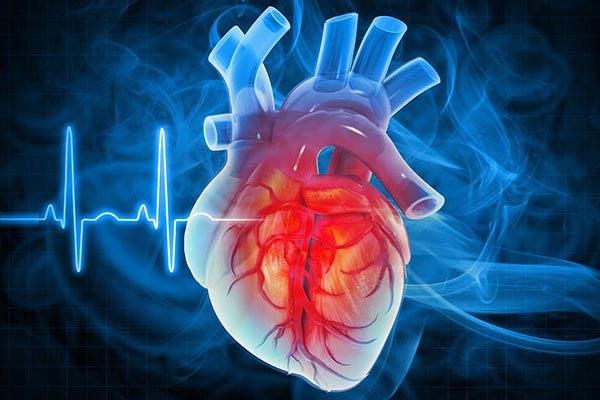 A talent whose work spanned generations, Catherine O’Hara graced audiences with a plethora of beloved characters before her passing in January 2026 at the age of 71. From the fiercely protective Kate McCallister in Home Alone to the eccentric Moira Rose in Schitt’s Creek, O’Hara brought to life some of the most iconic personalities in pop culture. All the while, she was living with an extremely rare, congenital condition that fans—and O’Hara herself—didn’t know she had.
In adulthood, O’Hara unwittingly learned that she was living with dextrocardia with situs inversus, which affects one in 10,000 people. Dextrocardia alone is when the heart’s axis is rotated toward the right instead of the left. When paired with situs inversus, the heart and other organs—including the stomach, liver and appendix—are all on the opposite side of where they’d normally be in the body.
O’Hara only learned about her condition because she underwent an EKG for an unrelated matter. Despite living with dextrocardia with situs inversus since birth, she experienced no symptoms—which is typical for many who have it.
“Most of these patients will be undiagnosed, especially if they don’t have any other concerns,” says interventional cardiologist Hitesh Raheja, MD, director of the Structural Heart Program at St. Mary Medical Center. “If you just have dextrocardia, it will not be diagnosed unless somebody does an EKG or chest X-ray, and then you’ll know that the heart is on the right side.”
There can be complications if a patient with situs inversus also has Primary Ciliary Dyskinesia, or Kartagener syndrome, which causes defective motile cilia—hairlike structures that help cells move—and issues with organ functionality. Chronic respiratory infections, bronchiectasis and more are common in PCD patients, who will likely receive a situs inversus diagnosis due to symptoms.
“Dextrocardia alone is usually a benign condition with no symptoms. When it’s with situs inversus, patients will usually only have problems if it’s also with PCD,” explains Dr. Raheja. “So unless you have PCD with it, you may not have any problems for your entire life and live normally.”
After hearing O’Hara’s story, which she shared during an interview in 2021, it’s natural for folks to wonder whether they, too, have been living with mirrored organs. However, Dr. Raheja urges against investigating unless there are symptoms.
“We should not be going to see a doctor and checking for dextrocardia. It’s a rare condition. If there are symptoms, then it will be diagnosed. Symptoms to watch out for with Ciliary Dyskinesia are extreme tiredness, chronic sinus infections, irregular heart rate, trouble breathing, shortness of breath despite never smoking, chronic coughing and infertility,” says Dr. Raheja. “These should be investigated further and it’s up to the doctor to make the diagnosis.”
Testing involves a chest X-ray and CAT scan, followed by an EKG and echocardiogram. In some cases, genetic testing may be involved, as situs inversus is a hereditary condition.