
Are my fall sniffles allergies or a cold? How to tell the difference and find relief
November 17, 2026Categories: Blog Posts
Tags: Allergy/Immunology
When it comes to your sinuses, the fall season can hold a lot of confusion.
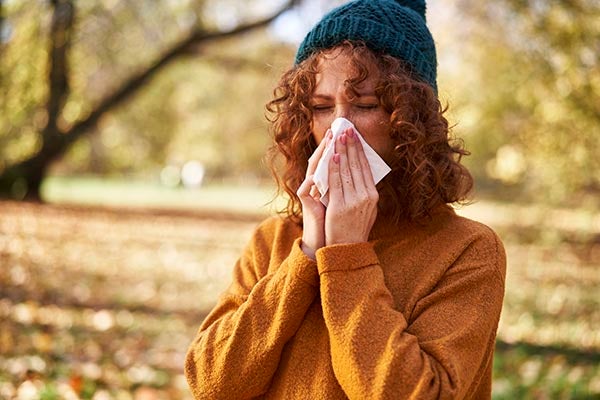 Seemingly out of the blue, your throat feels scratchy. You’re coughing.
A box of Kleenex doesn’t leave your immediate vicinity because your nose just won’t stop running. Is it a cold? The flu? COVID? It’s easy to jump to such diagnoses and fret that you might have to miss some highly anticipated holiday excitement.
But there’s good news! It might not be an illness after all—just fall allergies.
Many people don’t realize that seasonal allergies aren’t limited to springtime. So, when there’s a sudden onset of such symptoms in cooler weather, folks assume they’ve contracted a viral respiratory infection.
Luckily, according to Clarissa Merson, MD, a Year 3 resident with St. Mary Family Medicine Bensalem, there is a way to tell what’s going on in the body … and whether you’ll have to skip your favorite holiday activities.
“This time of year, patients come to me with symptoms like a runny nose and chronic cough, but no fever. That tips me off that it’s most likely fall allergies,” says Dr. Merson. “It’s really the fever that will differentiate between something like the flu and fall allergies.”
Despite fall allergies not causing a fever, the symptoms can still be unpleasant to live with, especially given their duration. While the worst of a cold or the flu is over within a week or so, seasonal allergies tend to last weeks or months.
“Allergies aren’t a viral infection, but there’s still an insult to your body, which is the pollen. Your body’s response is to try and get rid of it and almost treat it like a virus. The body increases your mucus to make the pollen not go into your body. Then everything’s dripping from your nose down to your throat, which irritates your throat, causing patients to complain about a cough,” says Dr. Merson. “Most patients who are coughing think they have a cold, but when you dive deeper, it’s a post-nasal drip from allergies.”
The types of pollen that trigger allergies vary between seasons. In spring, tree and grass pollen are the main drivers, whereas ragweed pollen is the dominant allergen in fall. Fungal mold spores can also be a trigger this time of year due to damp conditions, rotting leaves and humid air.
To minimize allergy symptoms this fall, Dr. Merson recommends the following:
- Keep windows closed
- Turn the air conditioner or heat on
- Use a HEPA (High-Efficiency Particulate Air) filter or air purifier
“You’re likely dragging pollen into your home, which can settle in places. Then when you’re cleaning or moving things around, you’re releasing all the pollen again. It’s like a vicious cycle in your own home.”
- Take allergy medications (Zyrtec, Claritin) at night
“When you take these at night, your body is at rest, giving the medicine time to settle. Then in the morning, your body is ready to block the histamine, versus if you take it in the morning after you’re already experiencing a stuffy nose. Your body has already released the histamine, and so, the medicine is playing catch-up. You won’t get as much relief.”
- Change your bedding often, as dust mites and dead skin cells can impact allergies
- Use a nasal saline after being outside to clean out pollen and dust
- Use a nasal corticosteroid, such as Flonase, which is designed to treat the nasal passages and block inflammatory substances, including histamines
For people dealing with sneezing, congestion and itchy eyes, relief is on the horizon. Fall allergy season typically winds down in late November or December as pollen levels decrease and the first hard frost hits, although the timing varies each year depending on weather conditions.Though symptoms will soon subside, those experiencing fall allergies may wonder if spring will see the return of their pollen-induced symptoms. The answer is, it depends.
“For some, it is worse in one season than the other. But because they have allergies, their body produces more histamine and is generally more sensitive to pollens—though which pollen they’re sensitive to various person to person,” says Dr. Merson. “If you have spring allergies, most likely you’ll have fall allergies or vice versa. The severity might be different.”
Understanding your individual triggers and working with your healthcare provider can help you manage your symptoms and enjoy seasonal activities more comfortably.