
Lung cancer is no longer just a smoker’s disease
April 28, 2026Categories: Blog Posts
Tags: Cancer Care, Lung Cancer
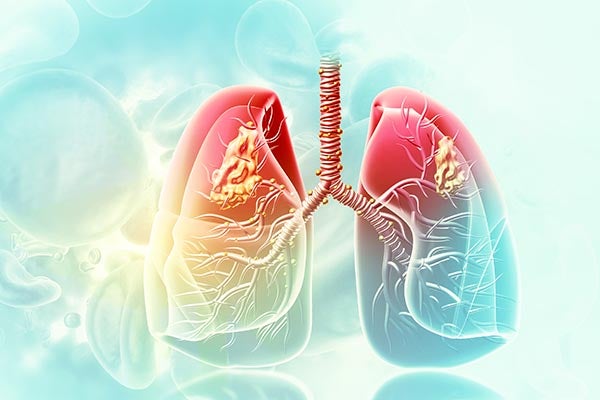 For decades, lung cancer was widely considered a smoker’s disease. Today, that perception is changing. More cases are being diagnosed in non-smokers—particularly women—prompting physicians to take a closer look at environmental and genetic risk factors.
According to Nina Maouelainin, DO, who launched an interventional pulmonology clinic at St. Mary Medical Center to identify potential lung cancer patients, there are a few reasons why. One major factor is exposure to radon, a naturally occurring radioactive gas that can seep into basements. Regular testing is recommended, and affordable home kits are widely available.
“It’s actually the No. 1 cause of lung cancer in non-smokers. The risk increases with long term exposure, even at moderate levels,” she says.
Another cause of lung cancer in non-smokers is air pollution, especially from diesel exhaust. Long-term exposure to diesel exhaust—such as sitting in heavily congested traffic daily—can cause chronic inflammation and DNA damage that increases lung cancer risk.
Research suggests there may also be a genetic component, with certain variants making lung cells more vulnerable to environmental damage.
“We are noticing that a lot of non-smokers with lung cancer often have targetable mutations like EGFR, ALK and ROS1. This is why lung cancer in non-smokers behaves like a different disease almost,” says Dr. Maouelainin.
Don’t ignore the symptoms
Non-smokers with lung cancer often experience symptoms—but may dismiss them. For otherwise active, healthy individuals, the possibility of lung cancer can feel unlikely. However, certain warning signs should never be ignored, including:
- Persistent dry cough
- Fatigue
- Unexplained weight loss
- Hoarseness
- Back or bone pain
- Shortness of breath
- A persistent throat tickle lasting more than four weeks
See also ...
Interventional pulmonology clinic at St. Mary Medical Center ensures swift treatment of lung cancer
Wellness Works blog, April 28, 2026
“Patients who don’t smoke should consider any pulmonary symptom as a red flag,” says Dr. Maouelainin, who urges these individuals to get a chest X-ray immediately.
High-tech treatment
When a suspicious nodule is identified, interventional pulmonology allows for minimally invasive diagnosis and treatment using a GPS catheter to reach the smallest branches of the lung. Years ago, this was impossible, as the common procedure at the time—bronchoscopy—involved a tube that could only travel so far.
“Technology has developed in such a way that we can now have a GPS catheter that uses real life images while the patient is asleep. I ask that GPS to identify the location of the lesion as small as 6mm, and I can GPS my way into those windpipes and biopsy something that small,” says Dr. Maouelainin. “I can also remove the tumor from the windpipe so the patient no longer has a blocked airway, and look inside the lungs through fluoroscopy and address pleural effusions.”
The interventional pulmonology clinic at St. Mary Medical Center is located in the Franciscan Building, Suite 411. It’s open to patients every Friday, with procedures performed at the hospital every Wednesday. The team is available for calls, texts and virtual consultations Monday through Friday.